📅 6–8 October 2026
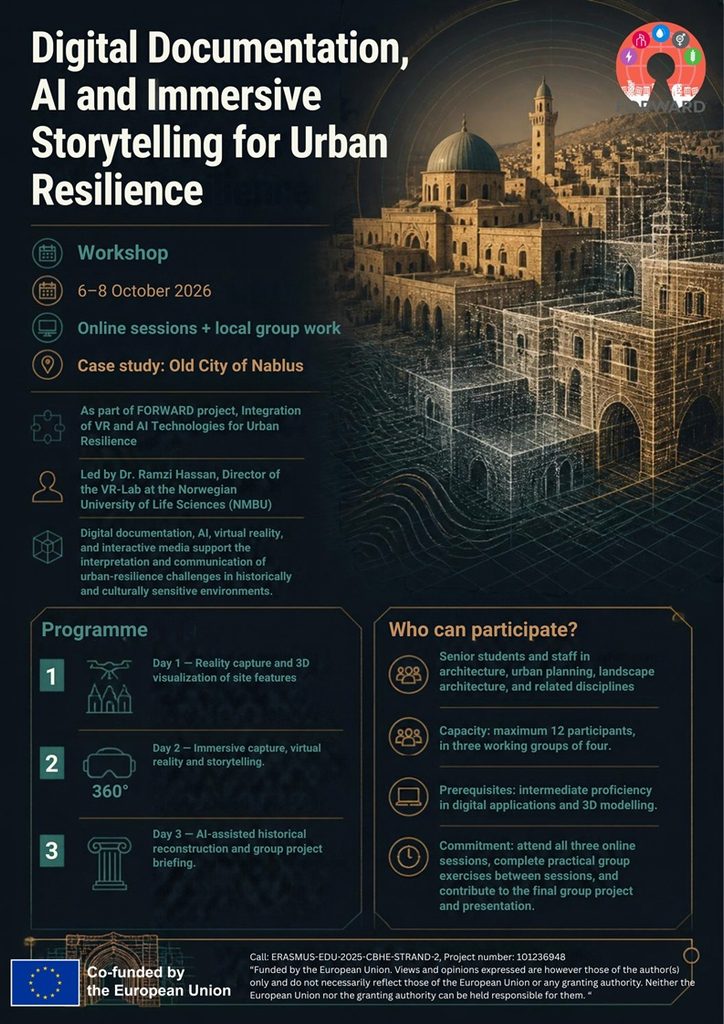
Online sessions + local group work
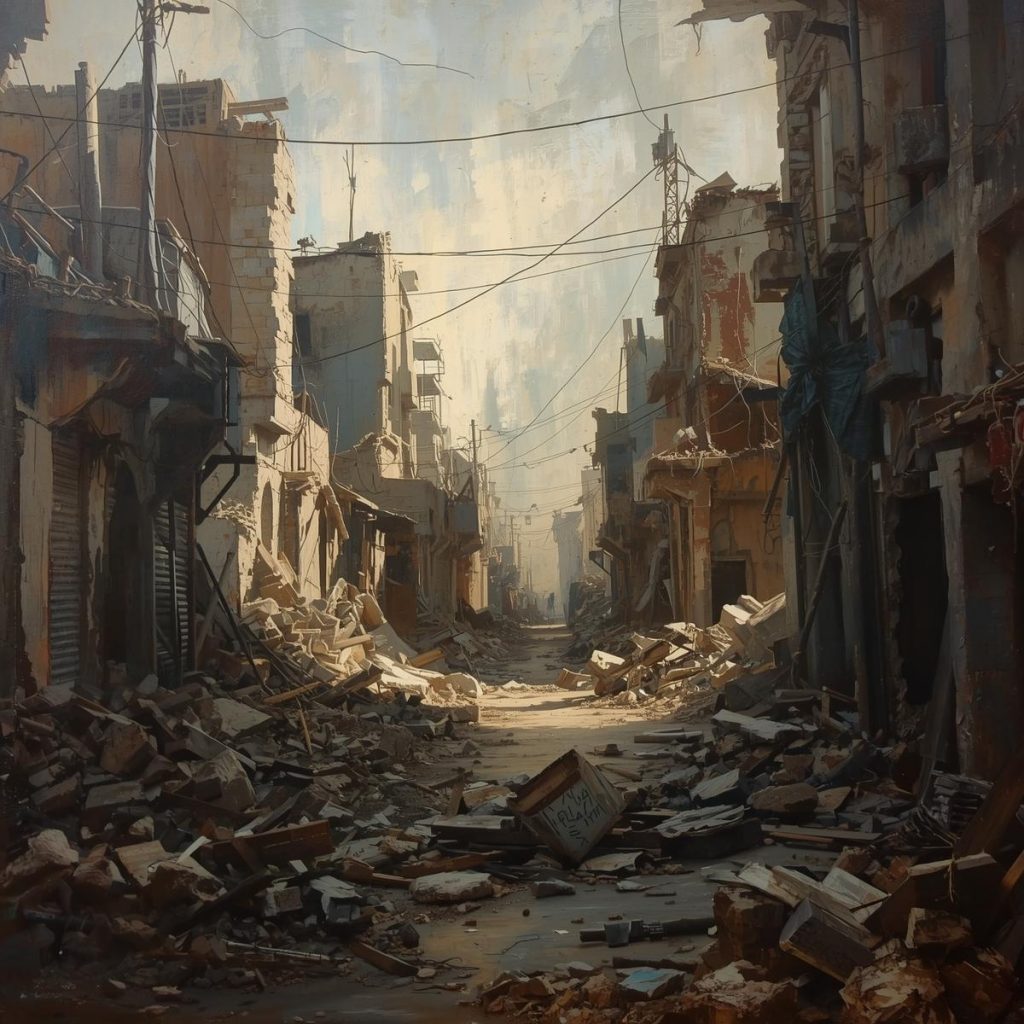
Case study: Old City of Nablus
As part of WP3 / Task 3.3 of the FORWARD project, Integration of VR and AI Technologies for Urban Resilience, we are pleased to announce a three-day workshop led by Dr. Ramzi Hassan, Director of the VR-Lab at the Norwegian University of Life Sciences (NMBU).
The workshop introduces an integrated workflow in which digital documentation, AI, virtual reality, and interactive media support the interpretation and communication of urban-resilience challenges in historically and culturally sensitive environments. The Old City of Nablus serves as the shared case study, and participants will explore how digital technologies can help document, interpret, and communicate its historical urban fabric, cultural heritage, and resilience challenges.
Format
Each day combines an online morning session introducing selected tools, technologies, and workflows with an afternoon practical session. In the afternoons, participants work locally in groups to apply the methods to the case study through onsite activities and digital production. A final session will take place by December 2026, possibly onsite at An-Najah National University (ANNU), where groups will present their projects and reflect on their results.
Draft programme
Day 1 – Reality capture and 3D visualization of site features: tools and techniques for capturing, documenting, and visualizing buildings, spaces, and site features.
Day 2 – Immersive capture, virtual reality and storytelling: 360° imagery, immersive environments, and digital storytelling for communicating spatial and historical information.
Day 3 – AI-assisted historical reconstruction and group project briefing: the potential and limitations of AI for historical reconstruction and visualization, followed by an introduction to the group project assignment.
Who can participate?
The workshop is intended for senior students and staff in architecture, urban planning, landscape architecture, and related disciplines who are interested in using advanced 3D visualization technologies to support historical studies, cultural heritage preservation, documentation, interpretation, and communication.
Capacity: maximum 12 participants, in three working groups of four.
Prerequisites: intermediate proficiency in digital applications and 3D modelling.
Commitment: participants are expected to attend all three online sessions, complete practical group exercises between sessions, and contribute to the final group project and presentation.