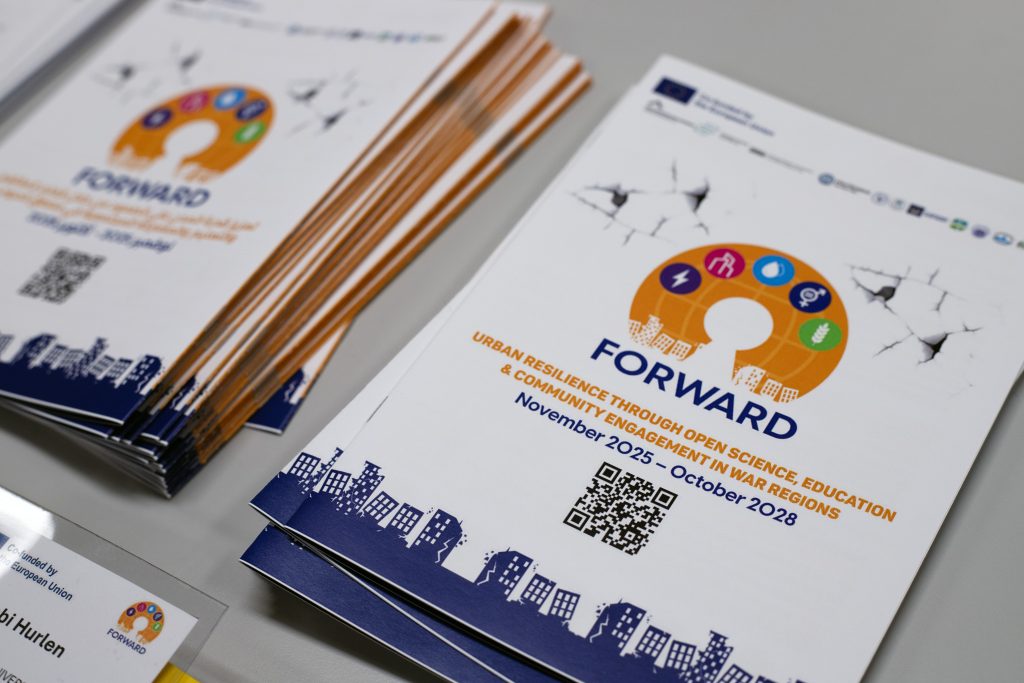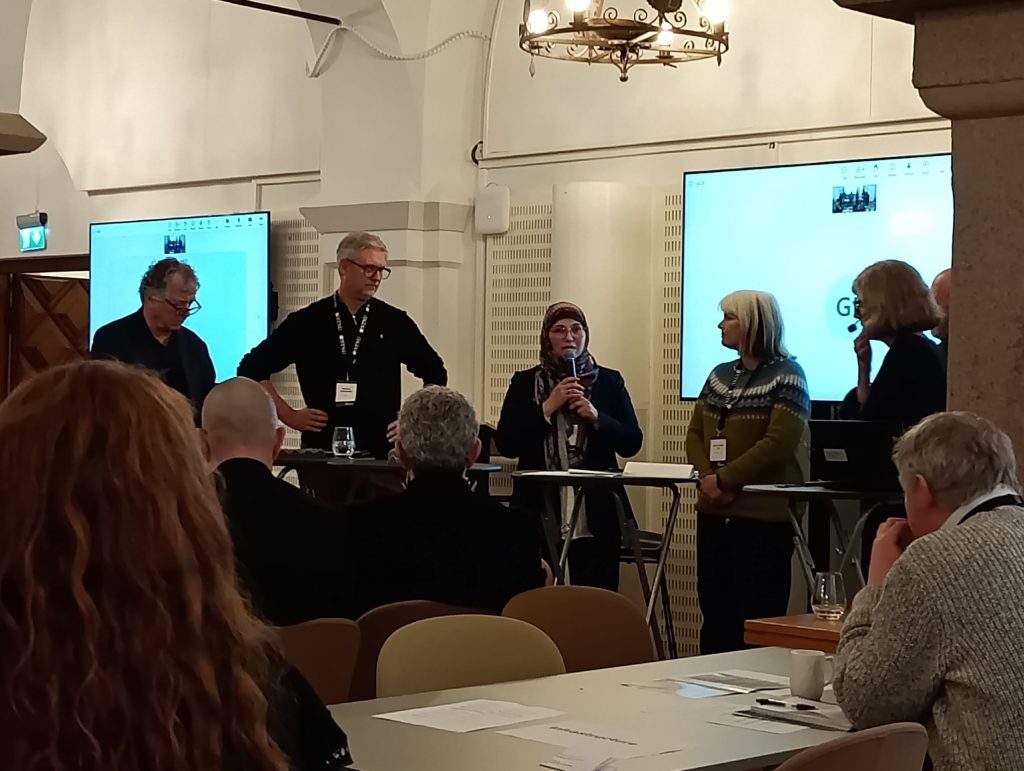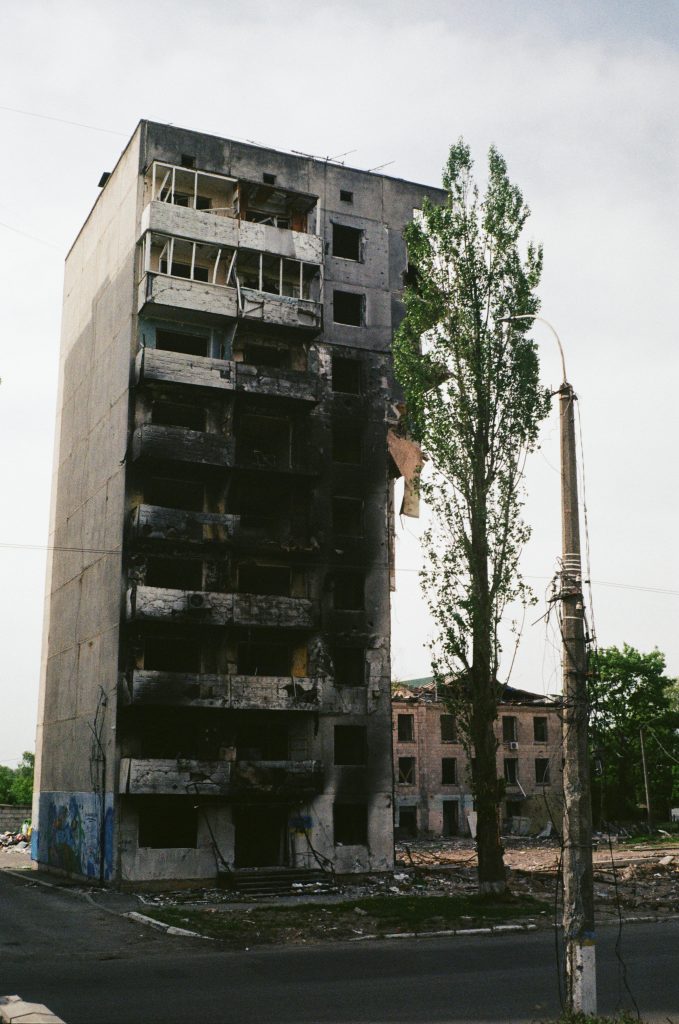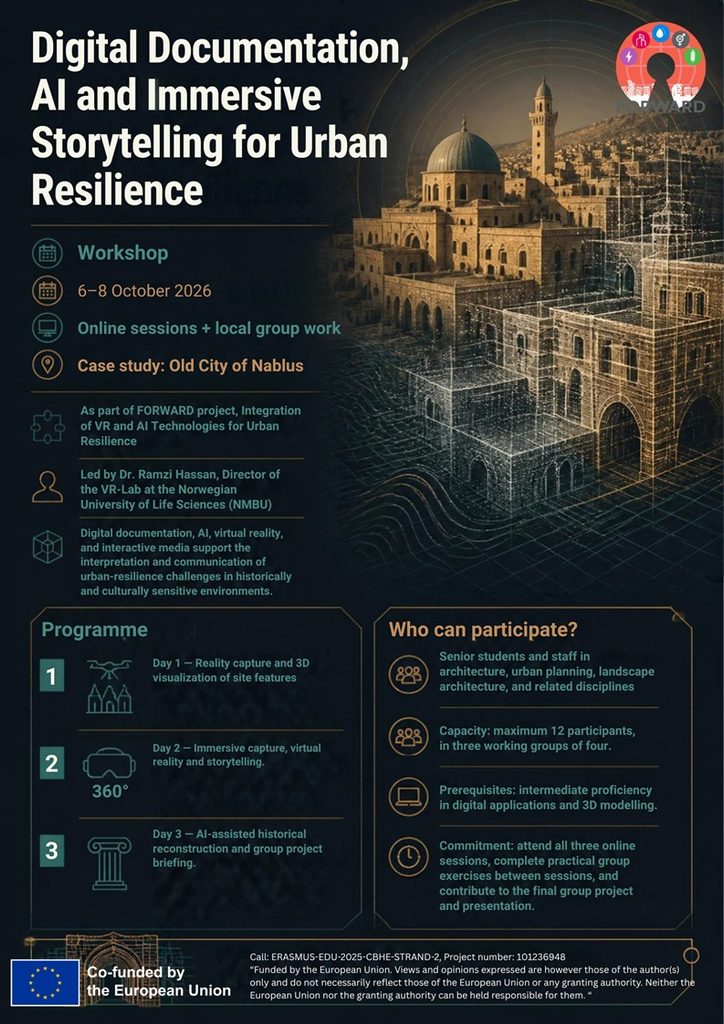
As organizers of the international workshop “Open Science and Urban Resilience in War-Affected Regions: Challenges and Pathways to Sustainable Recovery,” we are pleased to share key highlights and outcomes from this important event, held online (Zoom) on 23 April 2026. The workshop was organized within the framework of the FORWARD Project, funded by the European Union.
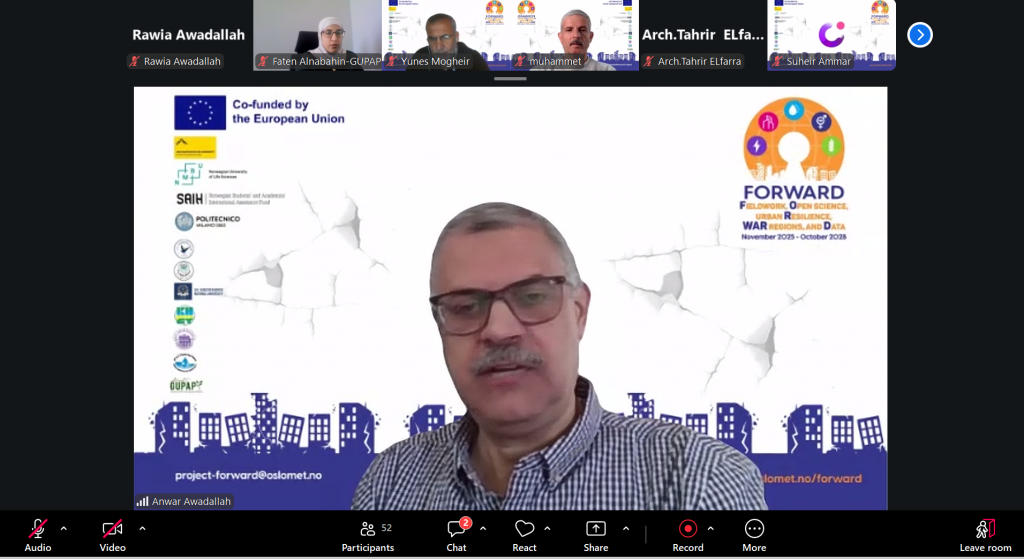
Workshop Overview and Objectives
The workshop was designed as a collaborative platform bringing together diverse stakeholders to explore the intersection of open science practices and urban resilience in conflict-affected settings. Building on the objectives outlined in the official announcement, the event aimed to:
- Examine current challenges facing urban systems in war-affected regions
- Identify opportunities for applying open science to support recovery and resilience
- Discuss digital research infrastructures enabling collaboration across fragmented contexts
- Explore capacity-building needs for researchers, institutions, and communities
- Foster cross-regional dialogue between Palestine and Ukraine
The workshop emphasized a participatory and evidence-based approach, integrating both empirical data and stakeholder perspectives.
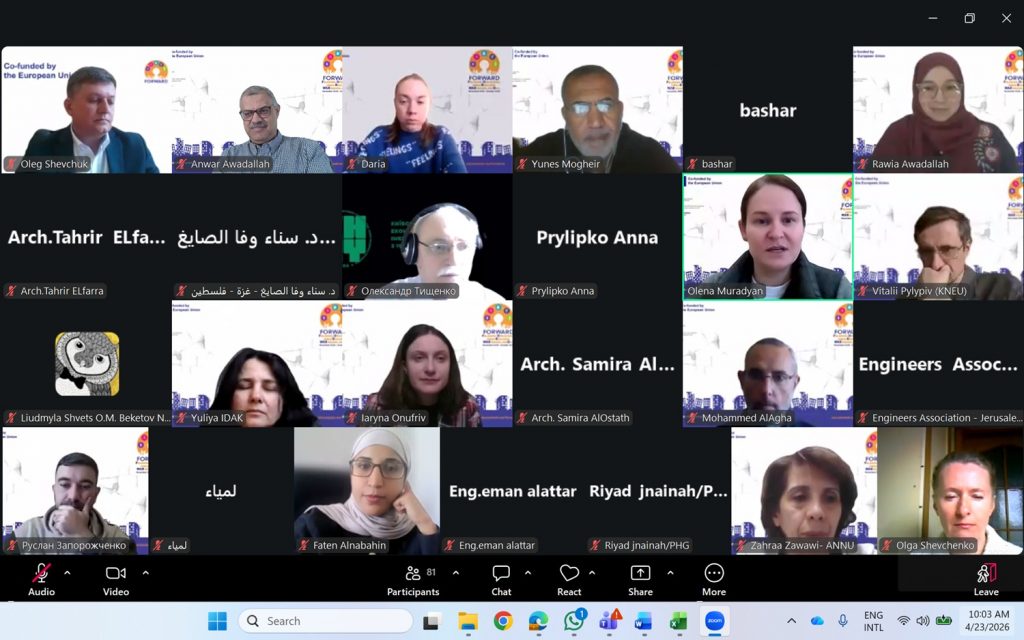
Participation and Representation
The workshop brought together participants from Palestine (West Bank and Gaza) and Ukraine, representing:
- Academic institutions
- Public sector organizations
- Civil society organizations
- Practitioners in urban development, sustainability, and resilience
A strong contribution came from An-Najah National University, whose representatives and stakeholders actively engaged in discussions, contributing valuable academic and practical insights.
Key Thematic Discussions
The discussions focused on critical sectors shaping urban resilience in conflict settings, including:
- Water and food systems
- Energy and infrastructure
- Housing and urban services
- Gender equality and inclusion
Participants also explored:
- The role of open science practices in crisis contexts
- Gaps in digital infrastructure for research collaboration
- Barriers to data sharing, accessibility, and reuse
These exchanges highlighted the interconnected nature of urban challenges and the need for integrated, data-driven approaches.
Survey Insights and Evidence-Based Findings
A central component of the workshop was the presentation of preliminary results from a survey involving over 200 participants across Palestine and Ukraine.
Key findings included:
- Severe infrastructure damage remains a primary barrier to resilience
- Limited access to essential services continues to affect urban populations
- Low adoption of open science practices, with approximately 42.7% of participants reporting they do not use such practices regularly
These findings underline the urgent need to:
- Strengthen open science awareness and training
- Develop accessible and resilient digital infrastructures
- Support context-sensitive research ecosystems
Interactive Format and Collaborative Outcomes
In line with the workshop design presented in the announcement, the event included:
- Expert presentations on open science and resilience frameworks
- Stakeholder discussions and breakout sessions to share local experiences
- Collaborative reflection on future research and policy directions
The interactive format enabled participants to move beyond diagnosis toward co-creating pathways for action, particularly in linking research, policy, and community needs.
Moving Forward
The workshop represents an important step in building a shared understanding of resilience challenges and the transformative potential of open science in war-affected regions.
As organizers, we emphasize that:
- Strengthening international collaboration is essential
- Investing in open, inclusive, and interoperable research systems is critical
- Supporting local capacities and knowledge production must remain a priority
We look forward to continuing this dialogue and translating these insights into concrete initiatives and collaborative actions within the FORWARD project and beyond.